
TLDR
- P&G beat first-quarter earnings estimates with $1.99 per share, 9 cents above expectations, driven by strong beauty and hair-care product sales.
- The company cut its annual tariff cost estimate in half to $400 million after tax, down from $800 million, mainly due to Canada lifting retaliatory duties on U.S. goods.
- Operating margins dropped 50 basis points year-over-year due to higher commodity costs and increased discounting to attract value-conscious shoppers.
- Beauty segment volumes grew 4% in the quarter, up from 1% in the prior quarter, while China reported double-digit growth in baby care despite challenging market conditions.
- P&G is exiting the laundry bars business in India and the Philippines, closing manufacturing in Pakistan, and planning to cut about 7,000 non-manufacturing roles over two years.
Procter & Gamble beat Wall Street expectations for its first quarter on Friday. The company posted earnings per share of $1.99, topping estimates by 9 cents.
Revenue came in at $22.39 billion for the quarter. That beat the $22.17 billion analysts were expecting.
The Tide and Pampers maker saw its stock rise about 3% following the results. Shares have fallen around 9% so far this year.
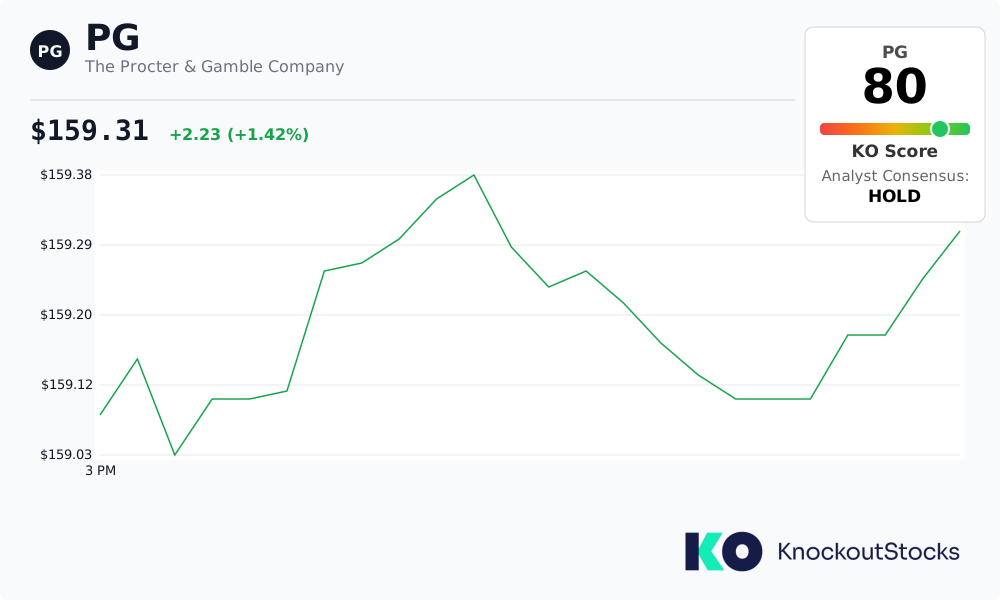
The Procter & Gamble Company, PG
Beauty and hair-care products drove much of the positive performance. The beauty segment saw volumes jump 4% in the three months ended September.
That’s a sharp acceleration from the 1% volume increase in the prior quarter. Prices in the beauty business also ticked up about 1% from the previous quarter.
Brands like Pantene shampoo and Olay products attracted shoppers despite higher prices. The grooming segment also posted growth on both pricing and volumes.
CFO Andre Schulten described the current consumer environment as “not great, but stable.” He noted that U.S. consumption across P&G’s categories has slowed somewhat in recent readings.
The company is seeing a split in shopping behavior. More financially stable consumers are buying larger pack sizes.
Lower-income shoppers are opting for smaller packs of basic items. They’re stretching their pantries as prices remain elevated.
Tariff Costs Get Cut in Half
P&G slashed its annual tariff cost estimate to $400 million after tax. That’s down from the $800 million projection made in July.
The reduction came largely because Canada lifted retaliatory tariffs on U.S. goods. P&G had raised some prices in the U.S. to offset tariff impacts.
The company lowered prices in Canada after those tariffs were canceled. However, President Trump terminated all trade talks with Canada on Thursday.
Schulten said the company has no new information that would change its current tariff exposure view. He made the comment during a media call with reporters.
China and Margin Pressures
China presented bright spots despite challenging conditions. The country saw double-digit growth in baby care categories.
Premium Bum Bum diapers drove demand in the market. A company spokesperson said consumer confidence remains low in China overall.
Operating margins fell 50 basis points compared to last year. Higher commodity costs from tariffs played a role in the decline.
Increased discounting from competitors in fabric-care and baby-care also pressured margins. P&G is working to offer more products at affordable price points, particularly diapers.
The company’s operating margins still exceed competitors like Colgate-Palmolive and Unilever. But the squeeze is real as P&G tries to balance pricing power with volume retention.
CEO Jon Moeller will be replaced by Shailesh Jejurikar on January 1. The transition comes as P&G navigates what it calls a “challenging consumer and geopolitical environment.”
P&G maintained its annual guidance for the year. The results showed the company is on track to hit those targets.
The company continues to refine its strategy of introducing improved products at higher prices. Items like Tide Evo detergent and Olay premium body wash are examples of this approach.
P&G is also making structural changes globally. The company is exiting the laundry bars business in India and the Philippines.
It has closed manufacturing operations in Pakistan. The company shifted to a distribution model there instead.
Schulten confirmed P&G plans to reduce about 7,000 non-manufacturing roles. The cuts will happen over the next two years.
TLDR
- P&G beat first-quarter earnings estimates with $1.99 per share, 9 cents above expectations, driven by strong beauty and hair-care product sales.
- The company cut its annual tariff cost estimate in half to $400 million after tax, down from $800 million, mainly due to Canada lifting retaliatory duties on U.S. goods.
- Operating margins dropped 50 basis points year-over-year due to higher commodity costs and increased discounting to attract value-conscious shoppers.
- Beauty segment volumes grew 4% in the quarter, up from 1% in the prior quarter, while China reported double-digit growth in baby care despite challenging market conditions.
- P&G is exiting the laundry bars business in India and the Philippines, closing manufacturing in Pakistan, and planning to cut about 7,000 non-manufacturing roles over two years.
Procter & Gamble beat Wall Street expectations for its first quarter on Friday. The company posted earnings per share of $1.99, topping estimates by 9 cents.
Revenue came in at $22.39 billion for the quarter. That beat the $22.17 billion analysts were expecting.
The Tide and Pampers maker saw its stock rise about 3% following the results. Shares have fallen around 9% so far this year.
The Procter & Gamble Company, PG
Beauty and hair-care products drove much of the positive performance. The beauty segment saw volumes jump 4% in the three months ended September.
That’s a sharp acceleration from the 1% volume increase in the prior quarter. Prices in the beauty business also ticked up about 1% from the previous quarter.
Brands like Pantene shampoo and Olay products attracted shoppers despite higher prices. The grooming segment also posted growth on both pricing and volumes.
CFO Andre Schulten described the current consumer environment as “not great, but stable.” He noted that U.S. consumption across P&G’s categories has slowed somewhat in recent readings.
The company is seeing a split in shopping behavior. More financially stable consumers are buying larger pack sizes.
Lower-income shoppers are opting for smaller packs of basic items. They’re stretching their pantries as prices remain elevated.
Tariff Costs Get Cut in Half
P&G slashed its annual tariff cost estimate to $400 million after tax. That’s down from the $800 million projection made in July.
The reduction came largely because Canada lifted retaliatory tariffs on U.S. goods. P&G had raised some prices in the U.S. to offset tariff impacts.
The company lowered prices in Canada after those tariffs were canceled. However, President Trump terminated all trade talks with Canada on Thursday.
Schulten said the company has no new information that would change its current tariff exposure view. He made the comment during a media call with reporters.
China and Margin Pressures
China presented bright spots despite challenging conditions. The country saw double-digit growth in baby care categories.
Premium Bum Bum diapers drove demand in the market. A company spokesperson said consumer confidence remains low in China overall.
Operating margins fell 50 basis points compared to last year. Higher commodity costs from tariffs played a role in the decline.
Increased discounting from competitors in fabric-care and baby-care also pressured margins. P&G is working to offer more products at affordable price points, particularly diapers.
The company’s operating margins still exceed competitors like Colgate-Palmolive and Unilever. But the squeeze is real as P&G tries to balance pricing power with volume retention.
CEO Jon Moeller will be replaced by Shailesh Jejurikar on January 1. The transition comes as P&G navigates what it calls a “challenging consumer and geopolitical environment.”
P&G maintained its annual guidance for the year. The results showed the company is on track to hit those targets.
The company continues to refine its strategy of introducing improved products at higher prices. Items like Tide Evo detergent and Olay premium body wash are examples of this approach.
P&G is also making structural changes globally. The company is exiting the laundry bars business in India and the Philippines.
It has closed manufacturing operations in Pakistan. The company shifted to a distribution model there instead.
Schulten confirmed P&G plans to reduce about 7,000 non-manufacturing roles. The cuts will happen over the next two years.
Procter & Gamble Surpasses Earnings Expectations Amid Market Challenges
Procter & Gamble (P&G) has kicked off its fiscal year with a strong performance, beating Wall Street expectations for the first quarter. The consumer goods giant reported earnings per share of $1.99, surpassing analysts’ estimates by 9 cents, and generating a revenue of $22.39 billion—above the anticipated $22.17 billion. Following the announcement, P&G’s stock rose approximately 3%, although shares have seen a decline of about 9% year-to-date.
The company’s robust earnings were largely driven by impressive sales in its beauty and hair-care segments, which saw a 4% increase in volume compared to just 1% in the previous quarter. Popular brands like Pantene and Olay have attracted consumers despite rising prices, indicating a shift in shopping behavior as financially stable customers opt for larger pack sizes while lower-income shoppers are gravitating towards smaller, more affordable options.
CFO Andre Schulten described the current consumer landscape as “not great, but stable,” noting a slowdown in U.S. consumption across P&G’s categories. The company is adapting to these changes by offering more products at competitive price points, particularly in the fabric-care and baby-care sectors.
Tariff Costs Halved
In a positive development, P&G has halved its annual tariff cost estimate to $400 million after tax, down from $800 million. This reduction is primarily due to Canada lifting retaliatory tariffs on U.S. goods, allowing P&G to adjust prices accordingly. However, the company remains cautious, as recent trade talks between the U.S. and Canada were abruptly terminated.
Challenges in China and Margin Pressures
Despite facing challenges in the global market, P&G reported double-digit growth in its baby care segment in China, driven by demand for premium products like Bum Bum diapers. However, operating margins fell by 50 basis points year-over-year, impacted by higher commodity costs and increased discounting from competitors. P&G is committed to maintaining its competitive edge, with margins still exceeding those of rivals like Colgate-Palmolive and Unilever.
Strategic Changes Ahead
As part of its ongoing strategy, P&G is making significant structural changes, including exiting the laundry bars business in India and the Philippines and closing manufacturing operations in Pakistan. The company plans to cut approximately 7,000 non-manufacturing roles over the next two years as it navigates a challenging consumer and geopolitical environment.
Looking ahead, P&G has maintained its annual guidance, indicating confidence in its ability to meet targets despite the hurdles. With a focus on innovation and premium product offerings, the company aims to continue its trajectory of growth in a competitive marketplace.
As CEO Jon Moeller prepares to transition leadership to Shailesh Jejurikar on January 1, P&G remains poised to adapt and thrive in an ever-evolving landscape.

