Empowering Beauty: A Catalyst for Economic Growth and Inclusivity in the Philippines
This is evident in the local setting, where Filipinos “show an incredible devotion to their hair.” According to Statista, the revenue from the hair care industry in the Philippines is projected to reach $1.09 billion this year. Data also showed that a typical Filipino spends more than P500 yearly on hair care.
Jose Francisco Benitez, director general of the Technical Education and Skills Development Authority (TESDA), says the beauty and wellness industry is “deeply personal”—a space that builds confidence, nurtures well-being, and sustains the livelihoods of countless families.
“The beauty and wellness sector is more than self-expression,” Benitez says. “It’s a pathway to income, entrepreneurship and social mobility.”
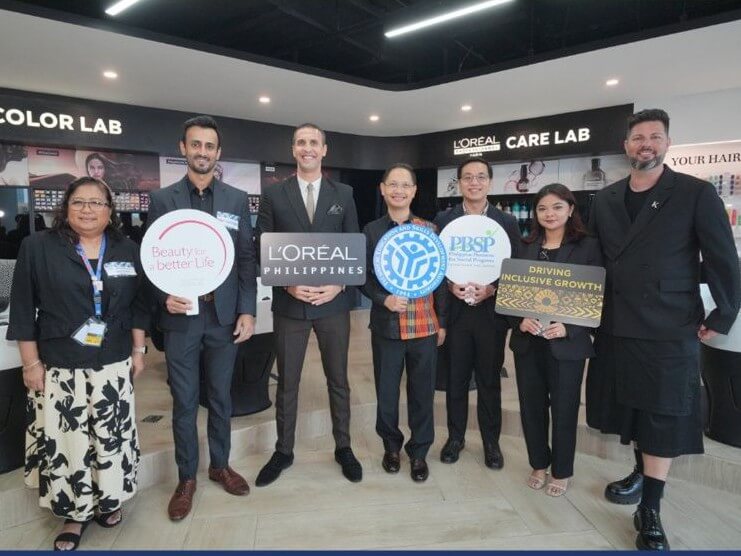
From left: Floramel Joy Songsong, TESDA chief TESD specialist; Hassan Khan, general manager, L’Oreal Philippines professional division; Yassine Bakkari, L’Oréal Philippines country managing director; Jose Francisco “Kiko” B. Benitez, TESDA Director General; Krhizzy Pasigan, L’Oréal Philippines corporate affairs director, and Elvin Ivan Y. Uy, PBSP executive director. | Contributed photo
It’s one of the key reasons why the beauty and wellness industry is classified as a priority sector in the Congressional Commission on Education’s (Edcom) National Education and Workforce Development Plan. A priority sector like this demands deeper investments in training, greater recognition and a stronger pipeline for workforce development.
Raise the bar
TESDA has officially joined the partnership between the Philippine Business for Social Progress (PBSP) and L’Oréal Philippines for the “Beauty for a Better Life” program, which aims to elevate the standards of the country’s hairdressing industry through innovation, education and skills development.
This landmark partnership expands the “Beauty for a Better Life” program, aimed at creating meaningful change by providing trainees not only a livelihood, but also confidence and a renewed sense of purpose.
The strategic collaboration seeks to elevate Philippine hairdressing by aligning national certification with global standards, offering advanced micro-credentialed training, and championing beauty as a force for economic empowerment.
Hair styling using Steampod, a professional straightening and curling iron that uses exclusive steam technology and an integrated comb to transform and style all hair types to perfectly straight or natural waves. | Contributed photo
In-salon training
Trainees will receive in-salon experience and internships with L’Oréal’s salon partners to prepare them for professional work or starting their own business. It is also accessible through both in-person and online platforms.
The training expense for the program is funded by L’Oréal and PBSP, making it free for the beneficiaries.
The L’Oréal Academy at the company’s new headquarters in Mandaluyong City will also serve as an accredited hairdressing assessment center, enabling graduates to gain recognition for their skills and competencies under TESDA’s national framework.
The initiative focuses on empowering women of all ages, LGBTQ+ individuals, out of school youth and other marginalized communities through free training in hairdressing and beauty skills.
Since its launch in 2017, the program has already produced nearly 500 graduates. The training enabled the graduates to become business-owners; secure stable jobs in salons; and even become trainers themselves.
Core competencies
TESDA provides nationwide hairdressing national certificate training, covering core skills such as hair cutting, coloring, perming, scalp treatments and basic cosmetology, but more work needs to be done to reach hairdressers in far-flung and underprivileged communities.
TESDA wants to emulate the same ecosystem that fuels the hairdressing industry of Japan, Korea and the United States. These countries view hairdressing as a profession that demands high standards and formal certification.
Benitez adds that the goal here is to match that level of professionalism not by strict regulation, but by improving training quality, equipping workers with globally competitive skills and mapping clear career paths across the value chain of beauty, wellness and care sectors.
The updated program will also introduce the L’Oréal Color Certification—a global program designed to help hairdressers become colorists with internationally recognized skills.
“With TESDA on board, our graduates can compete not just locally, but anywhere in the world. This partnership gives our beneficiaries something priceless: credibility, mobility and better chances for lasting success,” says Elvin Ivan Uy, executive director of PBSP.
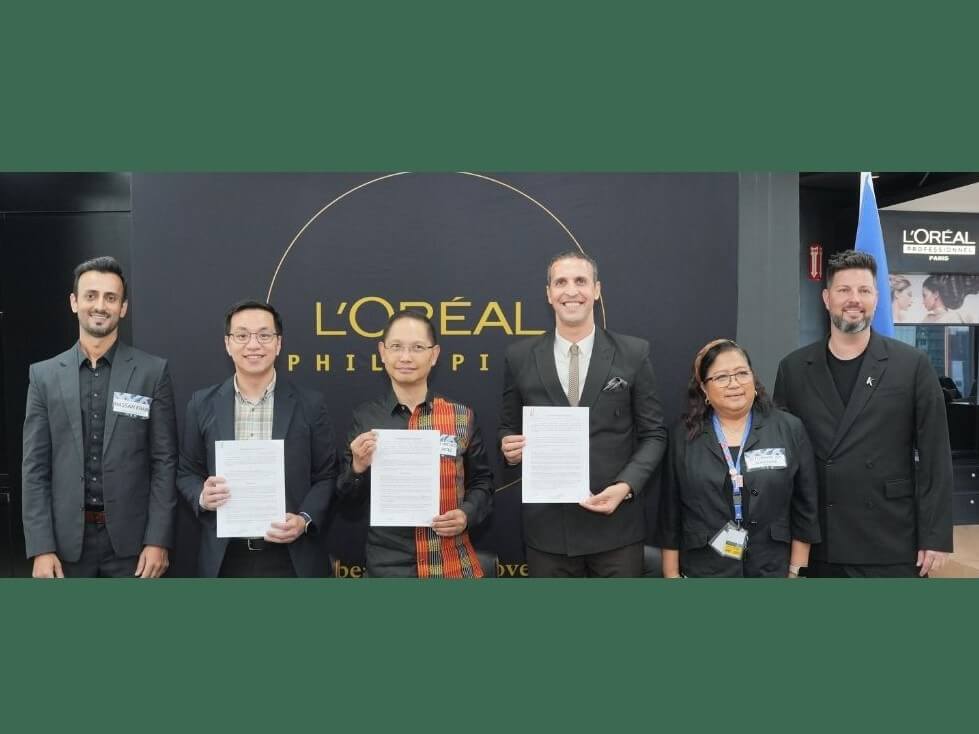
From left: Hassan Khan, general manager, L’Oreal Philippines professional division; Elvin Ivan Y. Uy, PBSP executive director; Jose Francisco “Kiko” B. Benitez, TESDA Director General; Yassine Bakkari, L’Oréal Philippines country managing director; Floramel Joy Songsong, TESDA chief TESD Specialist, and Adam McGraw, head of education for L’Oreal Philippines. | Contributed photo
77,000 registered salons in PH
Yassine Bakkari, country managing director of L’Oreal Philippines, points out that the Philippines is expected to have 77,000 registered salons in 2025, supported by a growing middle class and rising consumer interest in hair care and salon services.
The salon industry is not only expanding but also evolving, with increasing demand for professional services such as advanced color techniques and specialized treatments, highlighting a significant untapped potential.
The 115-year-old brand is highly committed to its stylists and believes its “powerful portfolio” in this market goes beyond just selling products, focusing on being a platform for stylists to express themselves. They recognize that the biggest challenge for the industry is the need for a trained workforce.
“This partnership is a testament to what can be achieved when the public sector, private companies and nongovernmental organizations unite for a common purpose. Together, we are not just creating a new program, we are building together a more inclusive environment for talented Filipinos,” Bakkari says.
Holistic approach
Hassan Khan, general manager professional products division of L’Oreal Philippines, believes that while education is the core strength and heart of their brand, it should also be a holistic approach, including not only technical upskilling but also business education.
“You might be an excellent technical expert,” he explains, “but if you can’t showcase those skills or leverage them to your advantage, you’re not getting the most out of your talent.” He adds that striking the right balance between technical mastery and business acumen is essential for a salon to thrive.
The program will begin with 50 to 60 hairdressers. The commitment doesn’t stop there as plans are already underway to renew the partnership next year and expand the training to TESDA’s wider network.
Interested applicants may check out the website of TESDA:www.tesda.gov.ph/assessmentcenters and L’Oreal Philippines Facebook page for more information.
Beauty Beyond Appearances: Empowering Lives Through the Hair Care Industry
In a world where appearances often take center stage, the beauty and wellness industry is emerging as a powerful catalyst for inclusivity and economic empowerment. In the Philippines, this trend is particularly evident, with a projected revenue of $1.09 billion for the hair care sector this year, according to Statista. Filipinos are known for their deep devotion to hair care, with the average individual spending over P500 annually on hair products and services.
Jose Francisco Benitez, Director General of the Technical Education and Skills Development Authority (TESDA), emphasizes that the beauty and wellness industry is “deeply personal.” It not only builds confidence but also sustains the livelihoods of countless families. “The beauty and wellness sector is more than self-expression,” he states. “It’s a pathway to income, entrepreneurship, and social mobility.”
A Priority Sector for Growth
Recognizing its significance, the beauty and wellness industry has been classified as a priority sector in the Congressional Commission on Education’s National Education and Workforce Development Plan. This classification calls for deeper investments in training and a stronger pipeline for workforce development.
In a landmark partnership, TESDA has joined forces with the Philippine Business for Social Progress (PBSP) and L’Oréal Philippines for the “Beauty for a Better Life” program. This initiative aims to elevate the standards of the country’s hairdressing industry through innovation, education, and skills development.
The program not only provides trainees with a livelihood but also instills confidence and a renewed sense of purpose. By aligning national certification with global standards and offering advanced micro-credentialed training, the initiative champions beauty as a force for economic empowerment.
Hands-On Training and Opportunities
Trainees will gain in-salon experience and internships with L’Oréal’s salon partners, preparing them for professional work or entrepreneurship. The training is accessible both in-person and online, with costs fully funded by L’Oréal and PBSP, making it free for beneficiaries.
The L’Oréal Academy in Mandaluyong City will serve as an accredited hairdressing assessment center, enabling graduates to gain recognition for their skills under TESDA’s national framework. The initiative particularly focuses on empowering women, LGBTQ+ individuals, out-of-school youth, and other marginalized communities through free training in hairdressing and beauty skills.
Since its inception in 2017, the program has produced nearly 500 graduates, many of whom have become business owners, secured stable jobs in salons, or even transitioned into trainers themselves.
Bridging the Skills Gap
TESDA provides nationwide hairdressing national certificate training, covering essential skills such as hair cutting, coloring, and basic cosmetology. However, there is still work to be done to reach hairdressers in remote and underprivileged communities. The goal is to emulate the high standards of hairdressing industries in countries like Japan and Korea, where the profession is recognized for its rigorous training and certification.
Benitez notes that the aim is to enhance training quality and equip workers with globally competitive skills, creating clear career paths across the beauty and wellness sectors. The updated program will also introduce the L’Oréal Color Certification, a global initiative designed to help hairdressers become internationally recognized colorists.
A Growing Industry
Yassine Bakkari, Country Managing Director of L’Oréal Philippines, highlights the potential of the salon industry, which is expected to grow to 77,000 registered salons by 2025. This growth is fueled by a rising middle class and increasing consumer interest in hair care and salon services.
“This partnership is a testament to what can be achieved when the public sector, private companies, and NGOs unite for a common purpose,” Bakkari states. “Together, we are not just creating a new program; we are building a more inclusive environment for talented Filipinos.”
A Holistic Approach to Training
Hassan Khan, General Manager of L’Oréal Philippines’ Professional Products Division, emphasizes the importance of a holistic approach to training. While technical skills are crucial, business education is equally important for salon success. “You might be an excellent technical expert, but if you can’t showcase those skills, you’re not getting the most out of your talent,” he explains.
The program will initially cater to 50 to 60 hairdressers, with plans to expand next year to reach a wider network through TESDA.
For those interested in joining this transformative initiative, more information can be found on TESDA’s website at www.tesda.gov.ph/assessmentcenters and the L’Oréal Philippines Facebook page.
As the beauty and wellness industry continues to evolve, it stands as a beacon of hope and opportunity, proving that true beauty goes far beyond appearances.