Potential End to Historic U.S. Government Shutdown: Economic Implications and Future Risks
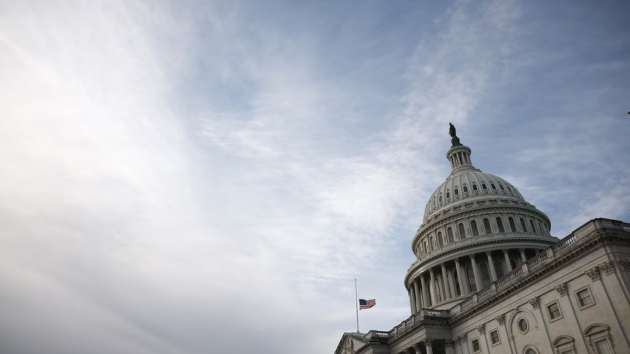
The U.S. Capitol, November 11, 2025, on Capitol Hill in Washington, DC. (Win Mcnamee/Getty Images)
(WASHINGTON) — The longest government shutdown in U.S. history could end as soon as Wednesday, ultimately putting hundreds of thousands of federal employees back to work, funding food stamps and smoothing out major travel disruptions.
The reopening averts a recession that may have come to pass in the event of a prolonged shutdown lasting weeks or months longer, analysts told ABC News.
A return of federal-worker backpay and the resumption of SNAP benefits, meanwhile, is set to undo most of the economic damage incurred by the shutdown, the analysts said. Still, they added, the two-month continuing resolution passed by the Senate risks future losses if a second shutdown begins early next year.
The shutdown arrived at a delicate moment for the nation’s economy, as a hiring slowdown raises fears of a recession and inflation proves difficult to fully contain.
“If the government opens up and people get back to work, this will prevent what might otherwise have been a pretty serious downturn in the economy,” Gerald Epstein, a professor of economics at the University of Massachusetts, told ABC News. “Come January, we could be in this same mess again.”
The Senate on Monday passed a short-term government funding bill and sent it to the House, where a vote could come as early as Wednesday. The bill would fund the government through Jan. 30 and provide funding for some government agencies for the remainder of the fiscal year.
Economic damage during the government shutdown centers primarily on unpaid government workers, who have foregone or limited spending, with negative consequences for nearby businesses, some economists said.
Many federal employees deemed non-essential have been furloughed without pay during the shutdown, while others, such as air traffic controllers, have been forced to work unpaid. In recent shutdowns, the total number of furloughed workers amounted to about 800,000 people, the Bank of America Institute found.
The loss of worker pay has caused considerable economic damage, amounting to a loss of 0.8% or $55 billion of annualized gross domestic product in the current quarter, Gregory Daco, chief economist at accounting firm EY, told ABC News. For reference, the economy grew by an average annualized rate of 1.6% over the first half of 2025, meaning the shutdown wiped away growth equivalent to about half of that achieved over a preceding six-month period.
“There’s a benefit to us having this very large U.S. employer now paying its workers again. That’s going to help,” Erica Groshen, a senior economics adviser at Cornell University and former commissioner of the Bureau of Labor Statistics under President Barack Obama, told ABC News.
An interruption of SNAP payments this month and major air-travel disruptions have also hindered the economy. Approximately 42 million recipients depend on Supplemental Nutrition Assistance Program benefits, which in turn fuel business for local grocers. More than 3 million passengers fly each day, and about one of every five of those travel for business, meaning disruptions hinder output at companies across the economy, some analysts said.
“There was growing disruption of air travel,” Daco said. “That’s an important part of the economy.”
The end of the government shutdown would also allow the federal government to resume the collection and release of key government data, including monthly inflation and hiring reports closely watched by policymakers, Groshen said.
The Federal Reserve is set to issue a decision on the level of interest rates early next month.
“When we get the government up and running again, we will reduce the uncertainty under which many decisions are being made,” Groshen said.
The end of the government shutdown will quickly reverse most of the economic damage, since furloughed workers are expected to spend backpay and SNAP recipients will likely rush to address any household food shortage, Jeffrey Campbell, an economics professor at Notre Dame University and a former senior economist at the Federal Reserve Bank of Chicago, told ABC News.
Some federal workers likely took out loans to fill the gap in pay, meaning the resolution will allow them to pay back creditors and smoothly sustain typical spending levels, Campbell added.
“Everybody understood that workers who showed up to work would eventually be paid,” Campbell said. “That prevented damage from happening.”
While several economists warned of a possible recession in the event of a continued shutdown, Campbell downplayed that possibility, saying the economy would likely have remained relatively unscathed.
A recession, he said, would have been “an unlikely event piled on top of another unlikely event.”
The 60-40 vote in the Senate in support of reopening the government included three full-year appropriations bills, including funding for SNAP benefits. But government funding would expire on Jan. 30, leaving open the possibility of a second shutdown.
Some analysts warned that a potential repeat of the shutdown could put the U.S. on the brink of another round of economic disruption.
“The crisis isn’t over,” Epstein said. “This is just a pause.”
ABC News’ Kevin Shalvey and Alexandra Hutzler contributed to this report.
Historic Government Shutdown Nears End, Averting Economic Crisis
By [Your Name] November 11, 2025 – Washington, D.C.
In a significant development for the nation’s economy, the longest government shutdown in U.S. history is poised to conclude as early as Wednesday. This pivotal moment could see hundreds of thousands of federal employees returning to work, restoring vital services such as food assistance and alleviating widespread travel disruptions.
The impending reopening of the government is seen as a crucial measure to prevent a potential recession that analysts warn could have escalated with a prolonged shutdown. “If the government opens up and people get back to work, this will prevent what might otherwise have been a pretty serious downturn in the economy,” said Gerald Epstein, an economics professor at the University of Massachusetts.
On Monday, the Senate passed a short-term funding bill, which is now headed to the House for a vote expected as early as Wednesday. This bill would fund the government through January 30, providing essential resources for various agencies and averting immediate economic fallout.
The shutdown, which has affected approximately 800,000 federal workers, has already inflicted considerable economic damage. Many employees have been furloughed without pay, while others, such as air traffic controllers, have been forced to work without compensation. The Bank of America Institute estimates that the shutdown has resulted in a staggering loss of $55 billion in annualized gross domestic product for the current quarter.
“An interruption of SNAP payments and major air-travel disruptions have also hindered the economy,” noted Gregory Daco, chief economist at EY. With around 42 million Americans relying on Supplemental Nutrition Assistance Program benefits, the halt in funding has had a ripple effect on local businesses and the economy at large.
As federal workers prepare to receive back pay, experts predict a swift recovery in consumer spending. “The end of the government shutdown will quickly reverse most of the economic damage,” said Jeffrey Campbell, an economics professor at Notre Dame University. “Everybody understood that workers who showed up to work would eventually be paid, which prevented damage from happening.”
However, the resolution is only temporary. The funding bill is set to expire on January 30, raising concerns about the potential for another shutdown in the near future. “The crisis isn’t over,” Epstein cautioned. “This is just a pause.”
As the Federal Reserve prepares to announce its decision on interest rates next month, the resumption of government operations will restore the collection and release of key economic data, providing much-needed clarity for policymakers navigating a delicate economic landscape.
While the immediate threat of recession appears to have been averted, the specter of future shutdowns looms large, leaving many to wonder if the nation’s economic stability can withstand another round of uncertainty.