Trump’s Tariff Strategy: Impacts on Prices and Trade Relations
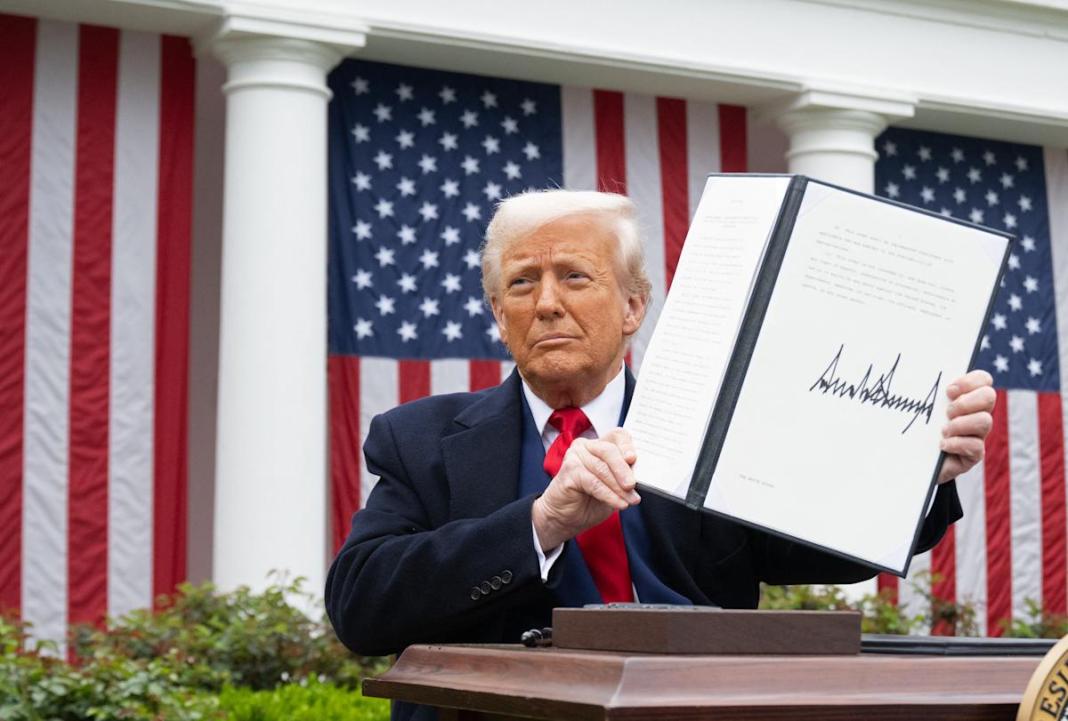
President Trump further expanded tariff breaks on Brazilian goods, part of moves to lower costs on some everyday goods as consumers grapple with price struggles. The move came a week after he signed a similar order more broadly reducing tariffs on goods including beef, tomatoes, coffee, and bananas.
The push to reduce food prices comes after electoral wins for Democrats across a number of key state and local races where candidates stressed affordability concerns. Trump has also in recent weeks floated the possibility of a tariff “dividend” for many Americans in the form of a $2,000 check. Trump said he was eyeing the rebate checks “probably in the middle of next year, a little bit later than that,” though officials have said Congress would need to approve them.
Rebate checks could detract from Trump administration pledges to use much of revenue from tariffs toward reducing US deficits. The Congressional Budget Office revised its estimate of tariffs’ impact on that front, saying it would shrink deficits by $3 trillion by 2035 instead of the $4 trillion it had projected in August.
Trump recently acknowledged that US consumers are “paying something” for his tariffs, the bulk of which face a looming verdict from the Supreme Court.
In a closely watched case, a majority of the justices — both the court’s three liberal-leaning justices, as well as three more conservative ones — offered skeptical questions regarding the president’s authority to impose his most sweeping duties. If the Supreme Court does not side with Trump, it’s widely expected that the administration will seek out alternative methods to carry out the US trade agenda.
Read more: What Trump’s tariffs mean for the economy and your wallet
-
The US and Switzerland have agreed to a deal to lower tariffs on Swiss imports to 15%, from a 39% level that had shocked the country over the summer. Switzerland will invest $200 billion in the US, the White House said.
-
The US and China reached a trade truce that will see China suspend additional export controls on rare earth metals and end investigations into US chip companies. As part of the deal, the US will pause some of Trump’s “reciprocal tariffs” on China for another year. (Read more: What are rare earth minerals, and why are they important?)
-
Trump said that “at some point,” he would reduce the tariff rate on Indian goods, and that the US was getting “close” to a trade deal with New Delhi.
LIVE
77 updates
-
Trump’s Tariff Strategy: Impacts on Prices and Trade Relations
President Trump further expanded tariff breaks on Brazilian goods, part of moves to lower costs on some everyday goods as consumers grapple with price struggles. The move came a week after he signed a similar order more broadly reducing tariffs on goods including beef, tomatoes, coffee, and bananas.
The push to reduce food prices comes after electoral wins for Democrats across a number of key state and local races where candidates stressed affordability concerns. Trump has also in recent weeks floated the possibility of a tariff “dividend” for many Americans in the form of a $2,000 check. Trump said he was eyeing the rebate checks “probably in the middle of next year, a little bit later than that,” though officials have said Congress would need to approve them.
Rebate checks could detract from Trump administration pledges to use much of revenue from tariffs toward reducing US deficits. The Congressional Budget Office revised its estimate of tariffs’ impact on that front, saying it would shrink deficits by $3 trillion by 2035 instead of the $4 trillion it had projected in August.
Trump recently acknowledged that US consumers are “paying something” for his tariffs, the bulk of which face a looming verdict from the Supreme Court.
In a closely watched case, a majority of the justices — both the court’s three liberal-leaning justices, as well as three more conservative ones — offered skeptical questions regarding the president’s authority to impose his most sweeping duties. If the Supreme Court does not side with Trump, it’s widely expected that the administration will seek out alternative methods to carry out the US trade agenda.
Read more: What Trump’s tariffs mean for the economy and your wallet
-
The US and Switzerland have agreed to a deal to lower tariffs on Swiss imports to 15%, from a 39% level that had shocked the country over the summer. Switzerland will invest $200 billion in the US, the White House said.
-
The US and China reached a trade truce that will see China suspend additional export controls on rare earth metals and end investigations into US chip companies. As part of the deal, the US will pause some of Trump’s “reciprocal tariffs” on China for another year. (Read more: What are rare earth minerals, and why are they important?)
-
Trump said that “at some point,” he would reduce the tariff rate on Indian goods, and that the US was getting “close” to a trade deal with New Delhi.
LIVE
77 updates
Trump Expands Tariff Breaks on Brazilian Goods Amid Rising Consumer Prices
In a strategic move aimed at alleviating the financial burden on American consumers, President Trump has expanded tariff breaks on Brazilian goods, following a recent order that broadly reduced tariffs on essential items such as beef, tomatoes, coffee, and bananas. This latest initiative comes as many Americans continue to grapple with soaring prices on everyday goods.
The decision to lower tariffs on Brazilian imports is part of a broader effort by the Trump administration to address affordability concerns, particularly after recent electoral victories for Democrats in key state and local races. Candidates in these elections emphasized the need for more affordable living conditions, a message that appears to have resonated with voters.
In addition to tariff reductions, Trump has floated the idea of a potential “tariff dividend,” proposing $2,000 checks for many Americans. He indicated that these rebate checks could be rolled out “probably in the middle of next year,” although they would require Congressional approval. Critics argue that such a move could undermine the administration’s commitment to using tariff revenues to reduce the national deficit.
The Congressional Budget Office (CBO) recently revised its estimates regarding the impact of tariffs on the deficit, projecting a reduction of $3 trillion by 2035, down from an earlier estimate of $4 trillion. This adjustment reflects the complexities of the current economic landscape, where the costs of tariffs are increasingly being felt by consumers.
Trump has acknowledged that American consumers are “paying something” for the tariffs, which are currently under scrutiny by the Supreme Court. In a closely watched case, several justices expressed skepticism about the president’s authority to impose such sweeping tariffs. Should the Court rule against Trump, it is anticipated that the administration will seek alternative methods to advance its trade agenda.
As the administration navigates these challenges, it has also reached agreements with other nations. Recently, the U.S. and Switzerland agreed to lower tariffs on Swiss imports from 39% to 15%, with Switzerland committing to invest $200 billion in the U.S. Additionally, a trade truce with China has resulted in the suspension of additional export controls on rare earth metals, alongside a pause on some of Trump’s reciprocal tariffs on China for another year.
Looking ahead, Trump has hinted at potential tariff reductions on Indian goods, suggesting that a trade deal with New Delhi may be on the horizon.
As the administration continues to grapple with the complexities of trade and tariffs, the impact on American consumers remains a focal point, with many eagerly awaiting the potential benefits of these policy changes.


